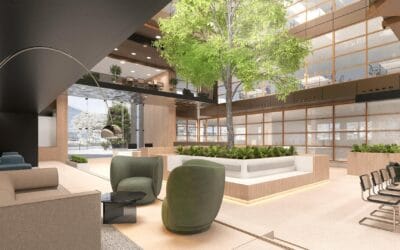
Workspace or Hospitality? How Office Expectations Are Changing
Over the last few years at FigFlex Offices, we’ve noticed a clear shift in how businesses approach their workspace decisions.
In the serviced office sector, conversations are no longer centred purely around location, licence terms, or workstation numbers. Increasingly, discussions during viewings and renewals revolve around something less tangible, but far more influential: experience.
Prospective clients now regularly ask about:
-
The quality of breakout spaces
-
Shower facilities
-
Coffee offering
-
On-site amenities
-
Community engagement and events
-
The presence of dedicated on site support teams
In short, businesses are assessing how a space feels just as much as how it functions.
The Office Is No Longer Just a Place to Work
Traditionally, commercial real estate operated on a straightforward model: long leases, fixed layouts, and limited service interaction.
That model is changing.
Today’s occupiers want flexibility, hospitality led service, and environments that help them attract and retain talent. The modern workplace is becoming less about square footage and more about employee experience.
As hybrid working continues to reshape office use, the role of workspace operators is evolving alongside it.
Experience Is Driving Decision Making
We’re increasingly seeing businesses allocate the same budgets differently.
Rather than maximising floor area, companies are choosing better quality environments with stronger amenities, even if that means slightly less space overall.
When organisations are encouraging their teams back into the office, the workspace has to justify the commute. Natural light, collaborative areas, wellness facilities, and strong community culture are no longer “nice to have” features, they’re part of the decision making process.
As our Head of Operations, Connor Shiels explains:
“We’re seeing a genuine shift in what businesses value. Workspace is no longer just about desks, it’s about the environment around them. Amenities, service, and community are playing a major role in both attracting new occupiers and retaining existing ones.”
Investing in Amenities That Matter
This shift is influencing how we approach both existing and new locations.
Across our portfolio, we’re actively enhancing amenity offerings. From upgraded breakout areas to improved wellness facilities and stronger community programming.
At our newest developments, these features are no longer secondary considerations. They’re designed into the space from day one.
The results are already clear: experience led environments are generating stronger interest, improving engagement, and directly influencing occupancy levels.
From Landlords to Hosts?
The traditional view of workspace operators positioned them primarily as landlords.
But as expectations evolve, the role is beginning to feel closer to something else entirely.
If businesses now expect service, atmosphere, and community alongside flexibility, the question for the wider office market becomes:
Are we still workspace operators, or are we becoming hosts for businesses?